Sample information |
|
| Picture |
|
|---|---|
| Location | Approximate location: 33.86, -118.03 |
| Collection date | 04/21/2026 |
| Captive / Cultivated? | Wild-caught |
| Group | California Academy of Mathematics and Science |
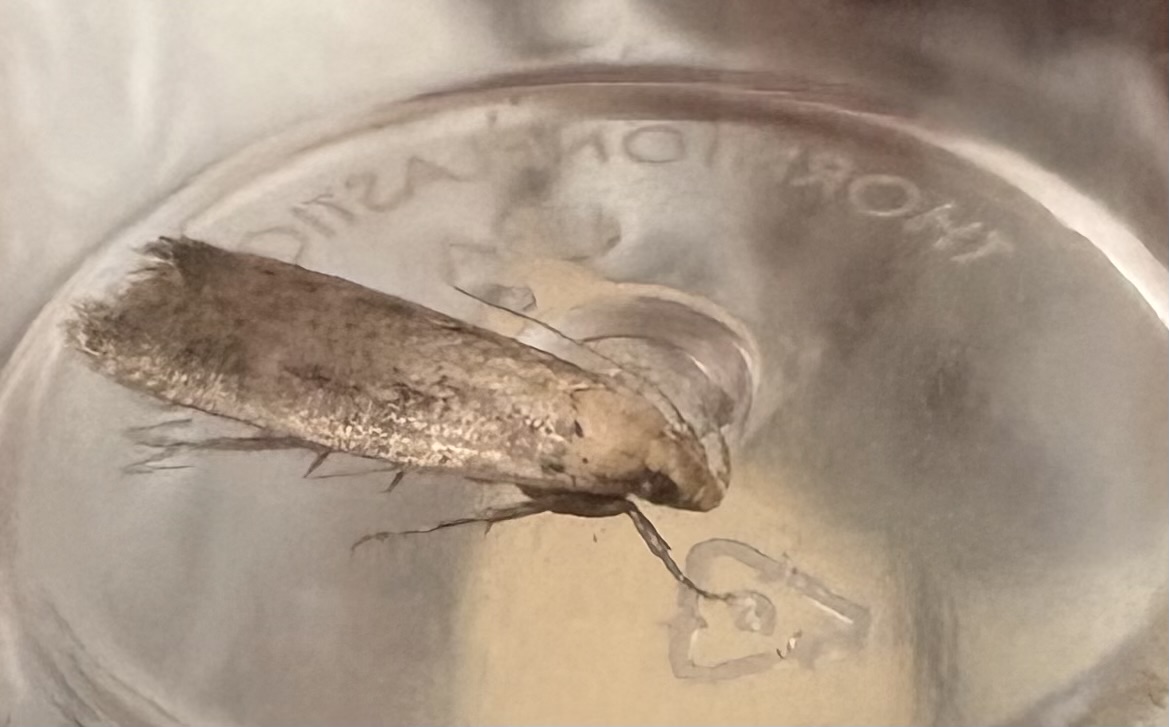
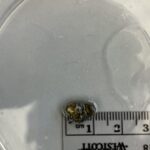
| Observations | The insect was found alone resting on a small plant in a large piece of vacant land next to parking lot, the area had little patches of grass growth and other small plants with a few trees spread out, it was mostly made up of dirt and gravel with a few small hills. The insects’ body was flat, and it had clayed colored wings with black and brown spots making it seem like it’s the species known as the clay-colored Agonopterix. |
| Putative identification | Arthropoda |
Methods |
|
| Extraction kit | DNeasy (Qiagen) |
| DNA extraction location | Whole arthropod |
| Single or Duplex PCR | Duplex Reaction |
| Gel electrophoresis system | agarose gel electrophoresis |
| Buffer | 1X TAE |
| DNA stain | UView |
| Gel images |
|
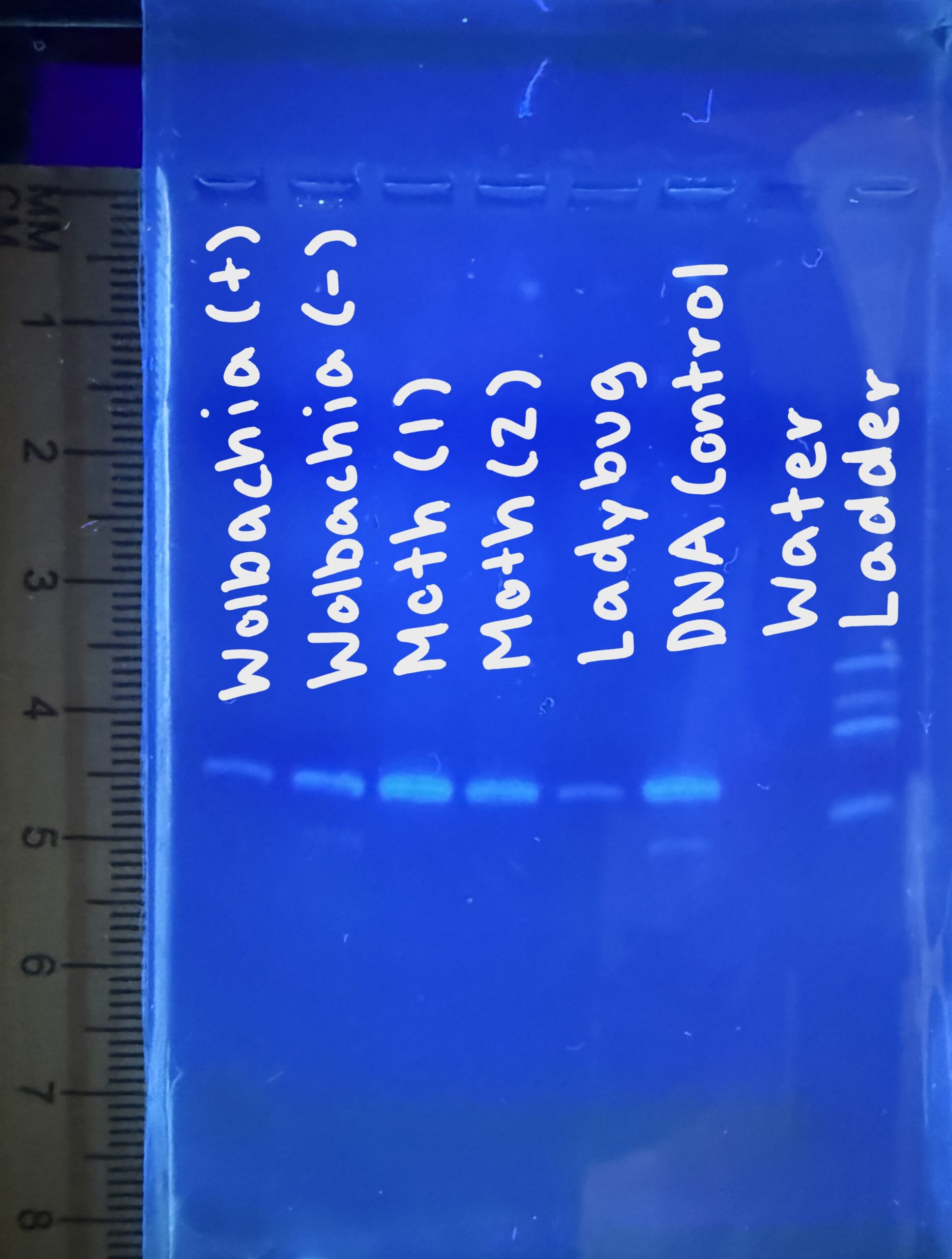
| Protocol notes | The gel was a 1% It was run at a voltage of 165 volts and then it slowly decreased to 95 volts throughout the hour, and a half the gel was run for. |
Results |
|
| Wolbachia presence | No |
| Confidence level | High |
| Explanation of confidence level | The control for the experiment worked, this is known to be true because after conducting the gel electrophoresis, the Wolbachia Positive control had 2 visible bands while the Wolbachia Negative had 1 visible band. This demonstrated that the Wolbachia Positive control was an arthropod with Wolbachia. In addition, the estimated base pair values (bp) of 421.697 and 635.331 calculated for the Wolbachia Positive control bands closely aligned with the known base pair values of Wolbachia which is 438 bp and 708 bp for Arthropod. Lastly, after receiving our results from the Wolbachia Database Lab, it can be seen that the Moth had a DNA sequence in the 600 bp range (648 bp specifically) and it was longer than the Wolbachia Positive DNA sequence for an arthropod that is in the 400 bp range (specifically 449 bp). Therefore, the moth tested was not positive for Wolbachia. |
| Wolbachia 16S sequence | |
| Arthropod COI sequence | Download FASTA
Download AB1
AGCAGGTATAGTAGGAACATCTTNAAGTTTATTAATTCGAGCTGAATTAGGANNNNNNNNNCTTTAATTGGAGATGATCAAATTTATAATACTATTGTAANNGCTCATGCTTTTATTATAATTTTTTTTATAGTTATACCAATTATAATTGGTGGCTTTGGAAACTGATTAGTACCTTTAATATTAGGAGCCCCAGATATAGCTTTCCCACGAATAAATAATATAAGTTTTTGACTTTTACCTCCATCATTAACTTTATTAATTTCAAGAAGAATTGTAGAAAATGGAGCAGGAACTGGATGAACAGTATATCCACCTTTATCTTCTAATATTGCCCATGGAGGAAGATCAGTTGATTTAGCAATCTTTTCTTTACATTTAGCAGGTATTTCATCAATTTTAGGAGCTATTAACTTTATTACTACAATTATTAATATACGAGTTAATGGAATATCATTTGATCAAATACCATTATTTGTTTGAGCTGTAGGAATCACAGCTTTATTACTTTTATTATCTCTTCCTGTATTGGCAGGTGCTATTACTATATTATTAACAGATCGAAATTTAAATACATCATTCTTTGATCCTGCAGGAGGGGGAGATCCAATTTTATATCAACATTTATTTTGATTTTTTGGTCACCCTGGAAGTTTAAA
BLAST at The Wolbachia Project BLAST at NCBI
|
| Summary | The Arthropoda was found to be negative for Wolbachia. |
 (no title)
 Yellowjacket Wasp
 Pillbug
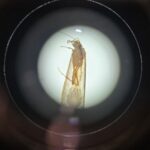 Umpachene Falls Caddisfly
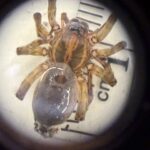 Wolf Spider