Sample information |
|
| Picture |
|
|---|---|
| Location | No map location data available. |
| Collection date | 05/10/2026 |
| Captive / Cultivated? | Wild-caught |
| Group | Thomas Jefferson High School for Science and Technology |
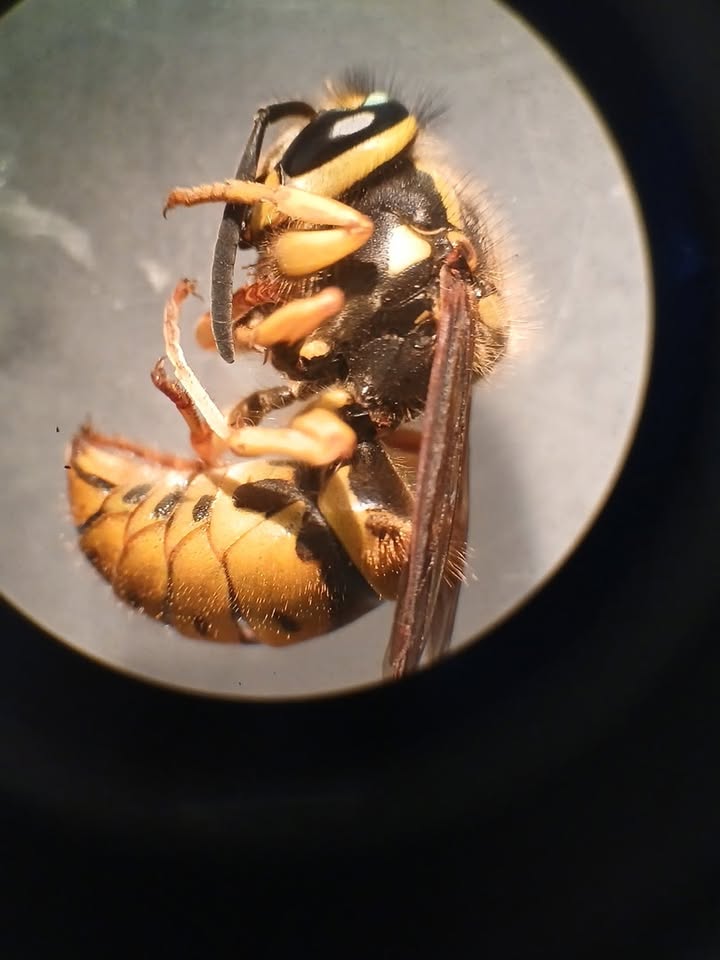
| Observations | The arthropod was collected outdoors in a grassy area near houses during the spring. It was found near plants and open ground, which is a common habitat for wasps as they search for food there. The weather was mild, and the specimen had a black and yellow body pattern with wings, legs, and antennae visible. |
| Putative identification | Arthropoda Insecta Hymenoptera Vespidae Vespula |
Methods |
|
| Extraction kit | DNeasy (Qiagen) blood and tissue kit |
| DNA extraction location | Abdomen |
| Single or Duplex PCR | Single Reaction |
| Gel electrophoresis system | MiniPCR |
| Buffer | TBE |
| DNA stain | SYBR Safe |
| Gel images |
|
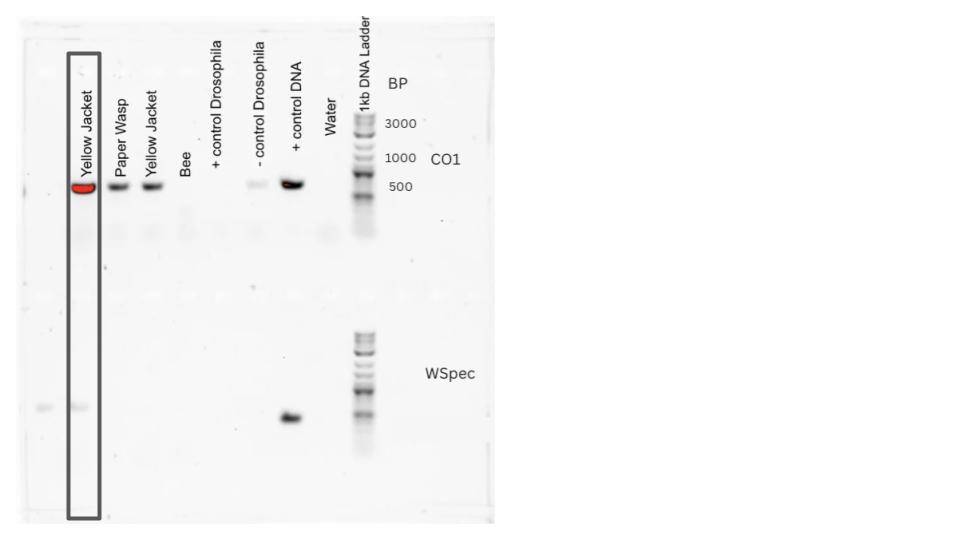
| Protocol notes | DNA was extracted using the DNeasy (Qiagen) Blood and Tissue Kit. PCR was performed as a single reaction for both CO1 and Wolbachia specific primers. Gel electrophoresis was run using the MiniPCR gel electrophoresis system with TBE buffer and SYBR Safe DNA stain. The CO1 gel was used to confirm successful arthropod DNA amplification, and the WSpec gel was used to test for the presence of Wolbachia. We also chose the DNA ladder to be in lane 10 instead of lane 6. |
Results |
|
| Wolbachia presence | No |
| Confidence level | Medium |
| Explanation of confidence level | I chose medium confidence because the CO1 result for sample 581 Yellow Jacket shows a clear band, which means the arthropod DNA was successfully amplified. However, the Wolbachia/WSpec section does not show a clear band for sample 581, so Wolbachia was not detected in this sample. The positive control shows a band, which means the PCR and gel generally worked, but some lanes are pretty faint and there may have been loading issues, so I am not completely confident. |
| Wolbachia 16S sequence | |
| Arthropod COI sequence | Download FASTA
Download AB1
|
| Summary | The Vespula was found to be negative for Wolbachia. |
 (no title)
 Yellowjacket Wasp
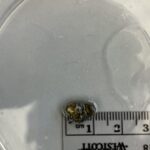 Pillbug
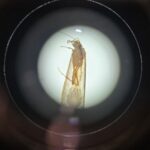 Umpachene Falls Caddisfly
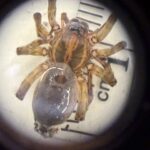 Wolf Spider