Sample information |
|
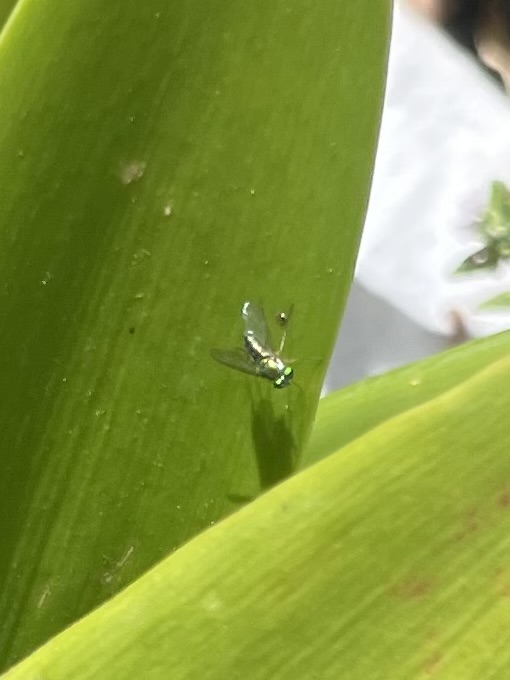
| Picture |
|
|---|---|
| Location | Approximate location: 33.86, -118.26 |
| Collection date | 05/12/2025 |
| Captive / Cultivated? | Wild-caught |
| Group | California Academy of Mathematics and Science |
| Observations |
|
| Putative identification | Arthropoda Insecta Diptera Dolichopodidae Condylostylus |
Methods |
|
| Extraction kit | DNeasy (Qiagen) blood and tissue kit |
| DNA extraction location | Whole arthropod |
| Single or Duplex PCR | Duplex Reaction |
| Gel electrophoresis system | Standard electrophoresis system Bio-Rad |
| Buffer | 1X TAE |
| DNA stain | 100X Fast Blast |
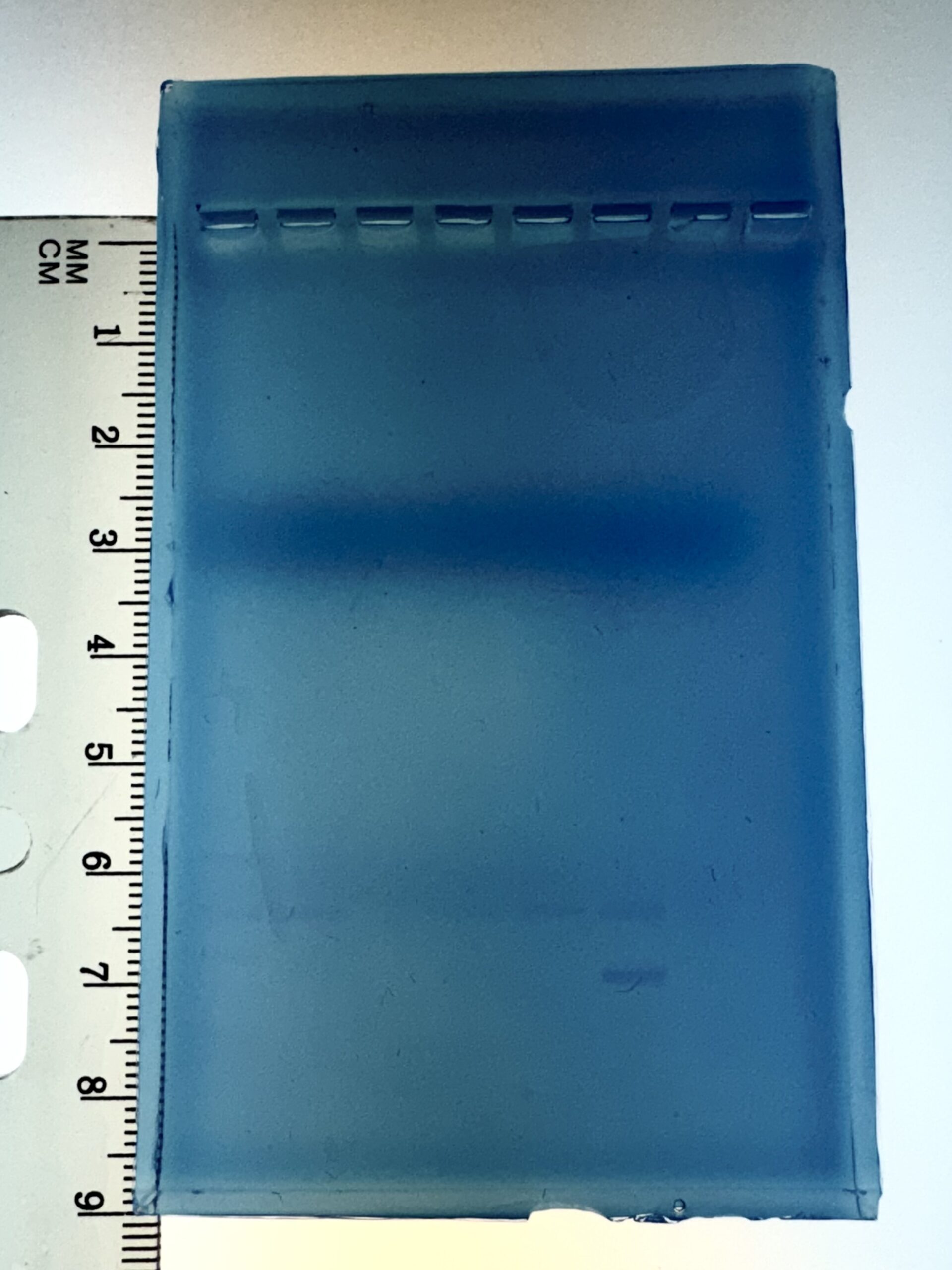
| Gel images |
|
| Protocol notes | The arthropods were caught and then ground to proceed to the DNA extraction and purification process. Once our experimental and control samples were prepped, we moved on to the PCR protocol. Samples and our PCR cocktail were added to each of our PCR tubes, which were then put into our MiniOne PCR machine. Finally, loading dye was added to the separated portions of our PCR samples and was loaded into our gel. Our final gel was stained with 100X Fast Blast and put onto a light box for imaging. |
Results |
|
| Wolbachia presence | Unknown |
| Confidence level | Low |
| Explanation of confidence level | The results of this arthropod are shown in lane 2 of the gel. The sample resulted in a band for the CO1 arthropod gene, but none for the 16S rRNA gene for Wolbachia. As there wasn’t a 16S rRNA gene in lane 4 for the positive DNA control that ensures that the PCR was successful, there isn’t sufficient evidence to make a conclusion about the presence of Wolbachia in the arthropod. |
| Wolbachia 16S sequence | |
| Arthropod COI sequence |
|
| Summary | |
 Millipede
 Brown Widow
 (no title)
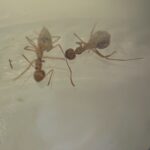 Texas Carpenter Ant
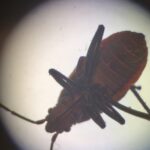 Boxelder Bug (Hemiptera)