Sample information |
|
| Picture |
|
|---|---|
| Location | Approximate location: 39.82, -84.90 |
| Collection date | 03/30/2022 |
| Captive / Cultivated? | Wild-caught |
| Group | Richmond High School |
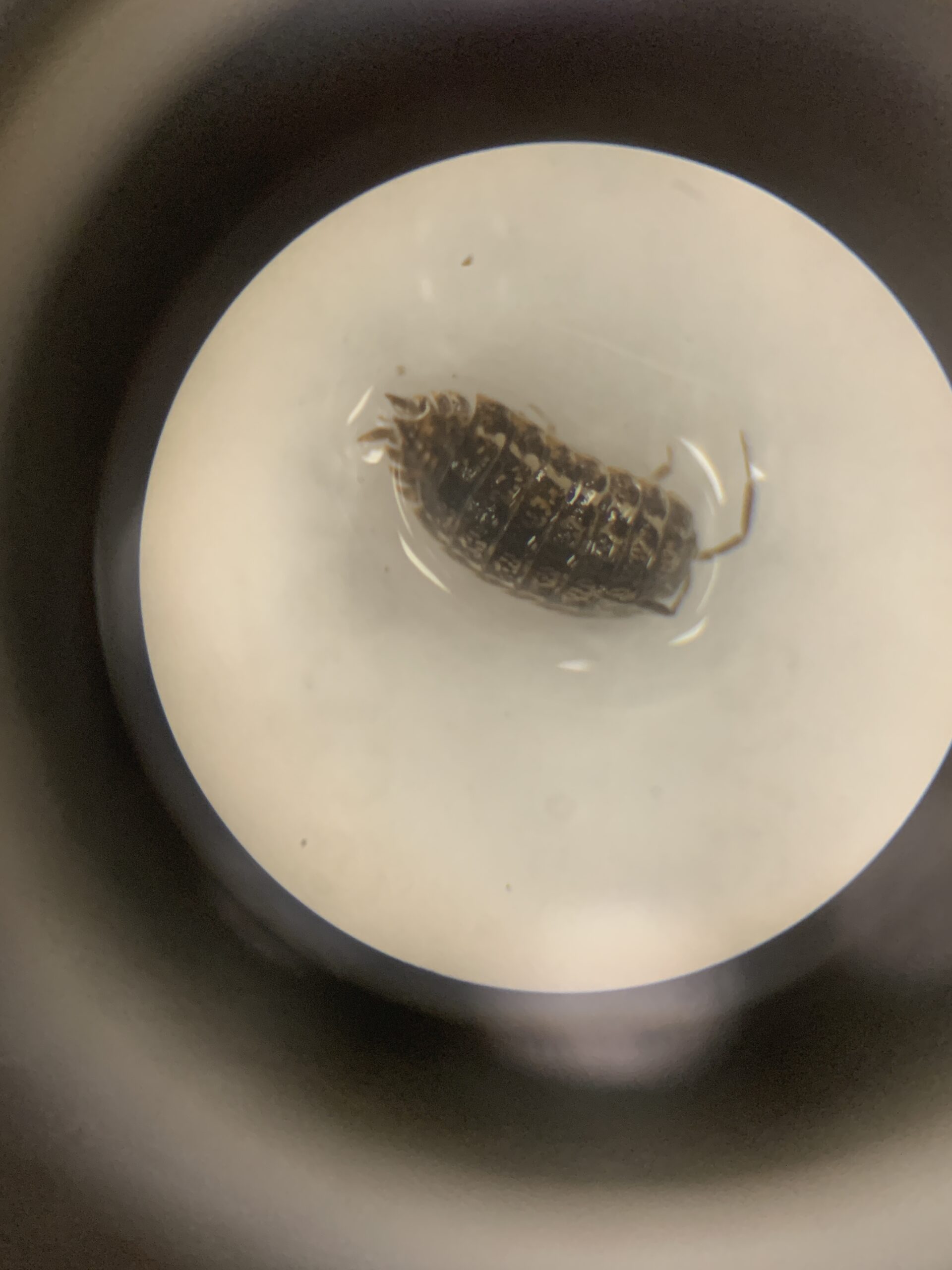
| Observations | The roly-polys were together under a log, where it was cold and wet. The roly-polys liked to stay away from sunlight, mostly likely in dry and dark places in the dirt. I observed that it had 7 sets of legs, a hard plated dark grey exoskeleton, an oval body, and curled into a ball when touched, so I was able to identify that it was a pillbug. |
| Putative identification | Arthropoda Malacostraca Isopoda Armadillidae Armadillidium Armadillidium vulgare |
Methods |
|
| Extraction kit | Thermoscientific GeneJet Genomic Purification |
| DNA extraction location | Abdomen |
| Single or Duplex PCR | Duplex Reaction |
| Gel electrophoresis system | Edvotek Gel Electrophoresis |
| Buffer | TAE |
| DNA stain | SYBR Safe |
| Gel images |
|
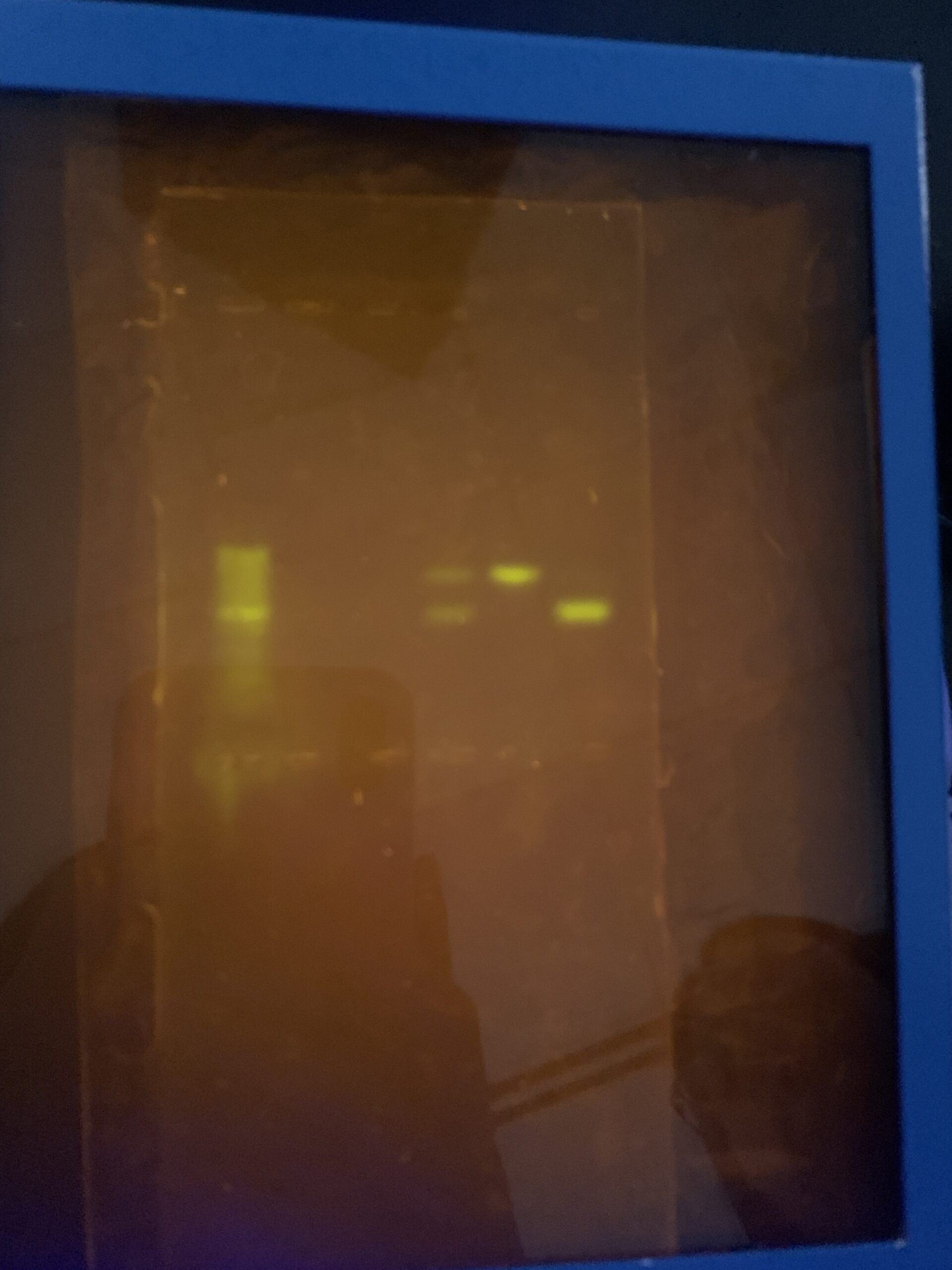
| Protocol notes | I think that the DNA was not thoroughly cleaned and that enough was pulled out of the cells in the reproductive tissues of my arthropod. |
Results |
|
| Wolbachia presence | Unknown |
| Confidence level | High |
| Explanation of confidence level | Through gel electrophoresis, I saw that my pill bug tested inconclusive for Wolbachia because the RFLPS for my arthropod DNA did not show when we interpreted the gel under a fluorescent light. Because of the temperature and the way the gel was loaded with the small amount of DNA from my pillbug, I was unable to see if my arthropod was negative or positive for Wolbachia. |
| Wolbachia 16S sequence | |
| Arthropod COI sequence |
|
| Summary | |
 Millipede
 Brown Widow
 (no title)
 Texas Carpenter Ant
 Boxelder Bug (Hemiptera)