Sample information |
|
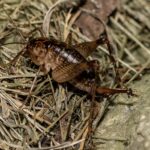
| Picture |

|
|---|---|
| Location | Approximate location: 41.78, -88.10 |
| Collection date | |
| Captive / Cultivated? | Wild-caught |
| Group | Benedictine University |
| Observations | Collected by Fall 2023 Students |
| Putative identification | Arthropoda Insecta Hymenoptera Formicidae Camponotus Camponotus pennsylvanicus |
Methods |
|
| Extraction kit | DNeasy (Qiagen) blood and tissue kit |
| DNA extraction location | Abdomen |
| Single or Duplex PCR | Single Reaction |
| Gel electrophoresis system | Standard electrophoresis system |
| Buffer | TAE |
| DNA stain | SYBR Safe |
| Gel images |

|
| Protocol notes | |
Results |
|
| Wolbachia presence | Yes |
| Confidence level | High |
| Explanation of confidence level | My confidence is high because when analyzing the gel electrophoresis, there was a 438 bp band present on the gel, similar to the band present for +Wolbachia. |
| Wolbachia 16S sequence | Download FASTA
|
| Arthropod COI sequence | Download FASTA
|
| Summary | The Camponotus pennsylvanicus was found to be postive for Wolbachia. |
 (no title)
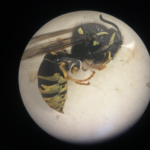 Yellowjacket Wasp
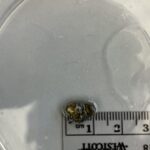 Pillbug
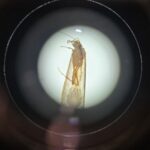 Umpachene Falls Caddisfly
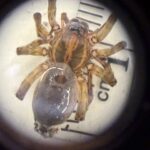 Wolf Spider