Sample information |
|
| Picture |
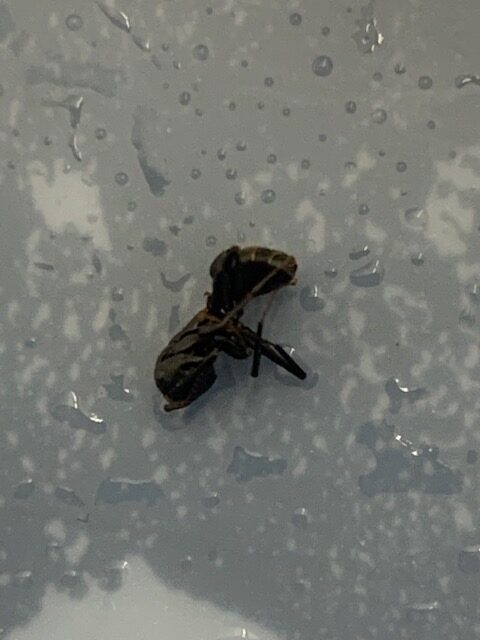
|
|---|---|
| Location | Approximate location: 42.58, -70.93 |
| Collection date | |
| Captive / Cultivated? | Wild-caught |
| Group | Essex North Shore Agricultural & Technical School |
| Observations | Dead. Black, and similarly shaped to a carpenter ant. |
| Putative identification | Arthropoda Insecta Hymenoptera Formicidae Crematogaster |
Methods |
|
| Extraction kit | Monarch DNA extraction (NEB) |
| DNA extraction location | Abdomen |
| Single or Duplex PCR | Single Reaction |
| Gel electrophoresis system | Edvotek Gel Electrophoresis |
| Buffer | TBE |
| DNA stain | GelGreen |
| Gel images |

|
| Protocol notes | Isolated DNA, made controls for both genomic DNA and positive/negative controls for Wolbachia, performed PCR, performed gel electrophoresis |
Results |
|
| Wolbachia presence | Yes |
| Confidence level | Medium |
| Explanation of confidence level | There is a tiny band in where the negative control should be but it could be the fact that there was some runoff into the lane from when the gel was loaded. |
| Wolbachia 16S sequence | |
| Arthropod COI sequence |
|
| Summary | The Crematogaster was found to be postive for Wolbachia. |
 (no title)
 Yellowjacket Wasp
 Pillbug
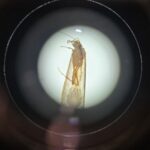 Umpachene Falls Caddisfly
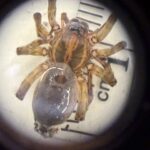 Wolf Spider