Sample information |
|
| Picture |
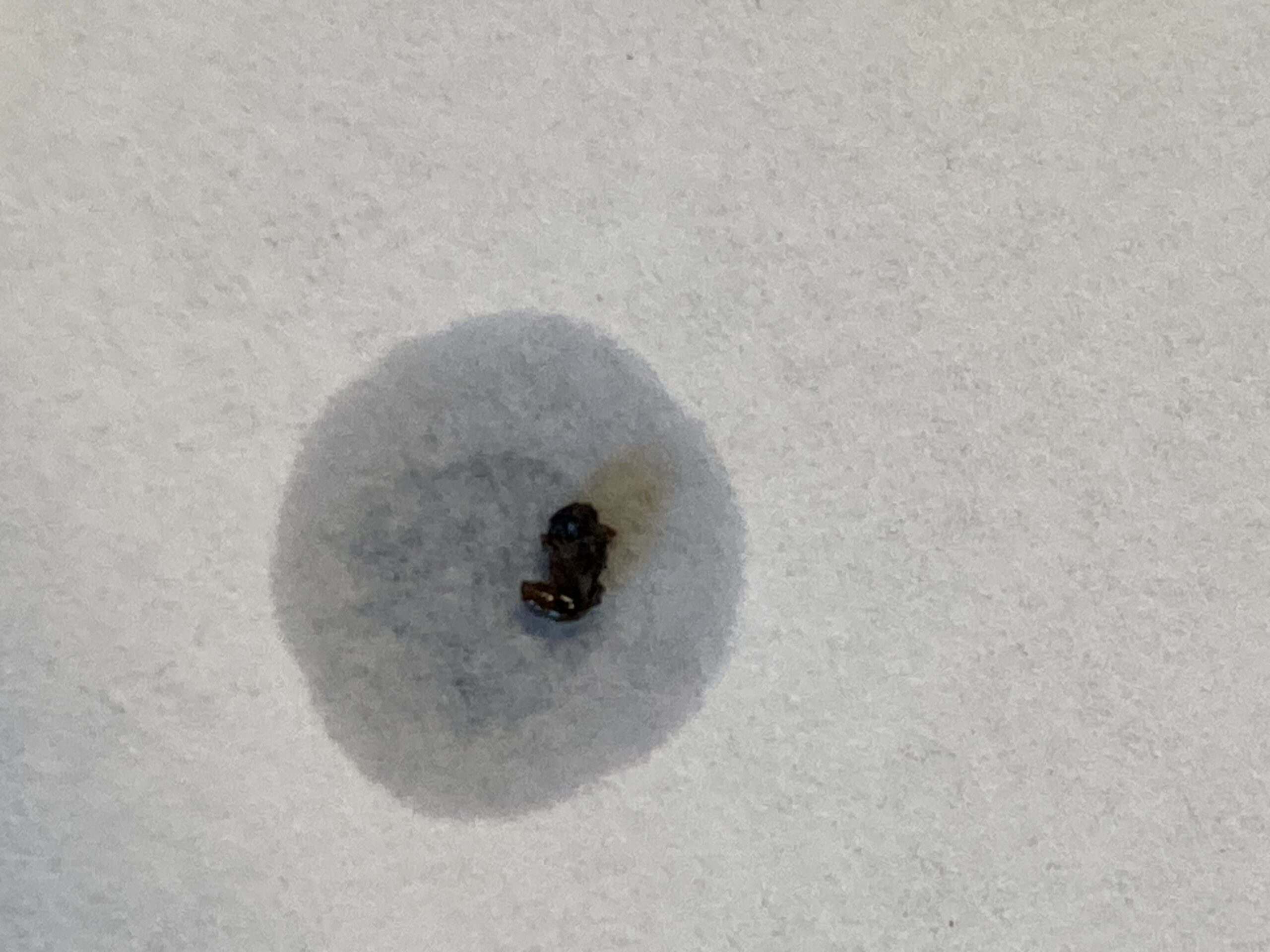
|
|---|---|
| Location | Approximate location: 44.93, -93.17 |
| Collection date | 08/29/2023 |
| Captive / Cultivated? | Wild-caught |
| Group | St. Paul Academy and Summit School |
| Observations | The arthropod appears to be an ant with six legs and three body parts. The arthropod was found next to a grassy field next to an ant nest. The arthropod was collected during summer, around noon, in 85F sunny weather. |
| Putative identification | Arthropoda Insecta Hymenoptera |
Methods |
|
| Extraction kit | DNeasy (Qiagen) blood and tissue kit |
| DNA extraction location | Whole arthropod |
| Single or Duplex PCR | Duplex Reaction |
| Gel electrophoresis system | MiniPCR |
| Buffer | TBE |
| DNA stain | GelGreen |
| Gel images |
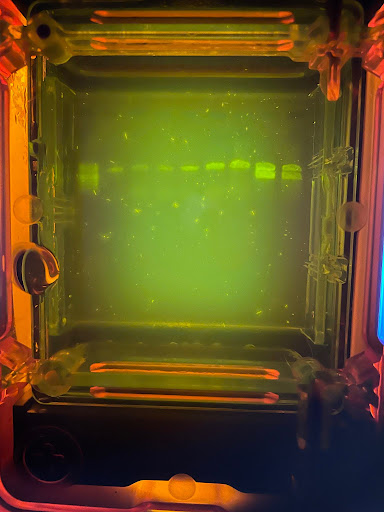
|
| Protocol notes | The result of the gel electrophoresis is in lane 5 from left to right. |
Results |
|
| Wolbachia presence | No |
| Confidence level | High |
| Explanation of confidence level | The controls worked, and the gel electrophoresis results are clearly visible. There is only one band, meaning there is no Wolbachia DNA present. |
| Wolbachia 16S sequence | |
| Arthropod COI sequence |
|
| Summary | The Hymenoptera was found to be negative for Wolbachia. |
 Millipede
 Brown Widow
 (no title)
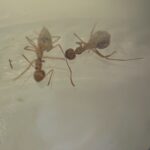 Texas Carpenter Ant
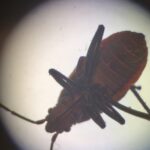 Boxelder Bug (Hemiptera)