Sample information |
|
| Picture |
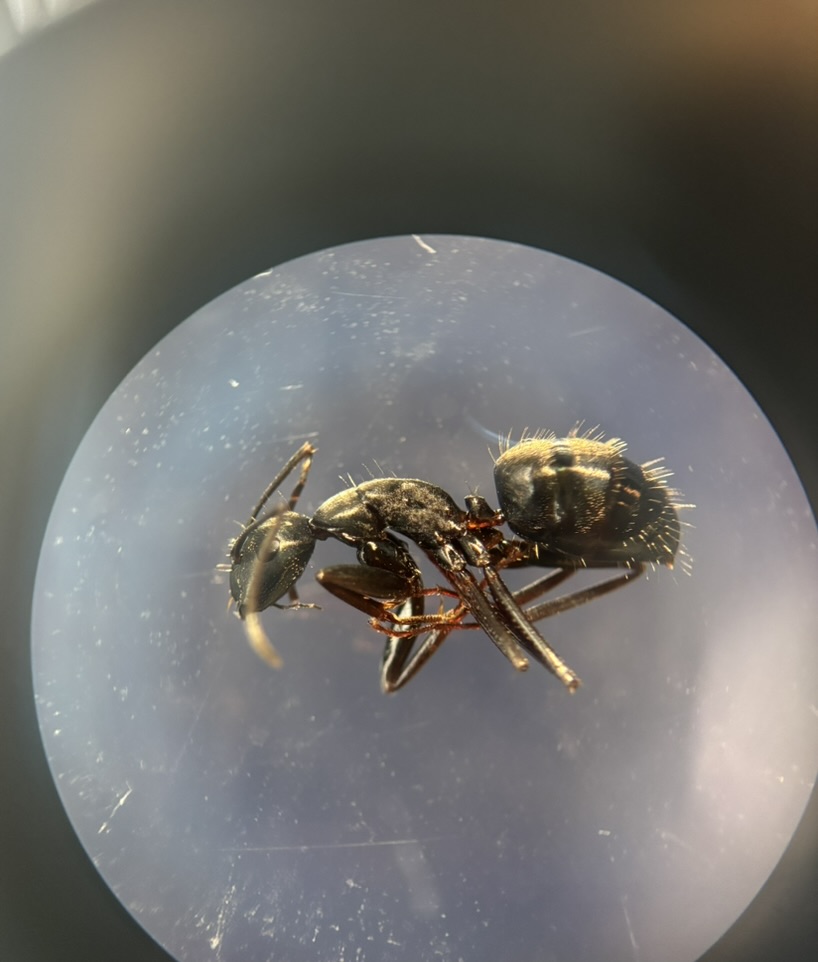
|
|---|---|
| Location | Approximate location: 40.62, -74.57 |
| Collection date | 06/03/2025 |
| Captive / Cultivated? | Wild-caught |
| Group | Pingry School |
| Observations | The insect was found crawling up a tree in the woods behind the Pingry School. The insect had a black-colored body, three segments, six legs, and two antennae |
| Putative identification | Arthropoda Insecta Hymenoptera Formicidae Camponotus Camponotus pennsylvanicus |
Methods |
|
| Extraction kit | DNeasy (Qiagen) blood and tissue kit |
| DNA extraction location | Abdomen |
| Single or Duplex PCR | Single Reaction |
| Gel electrophoresis system | Standard electrophoresis system |
| Buffer | 1X TAE |
| DNA stain | SYBR Safe |
| Gel images |
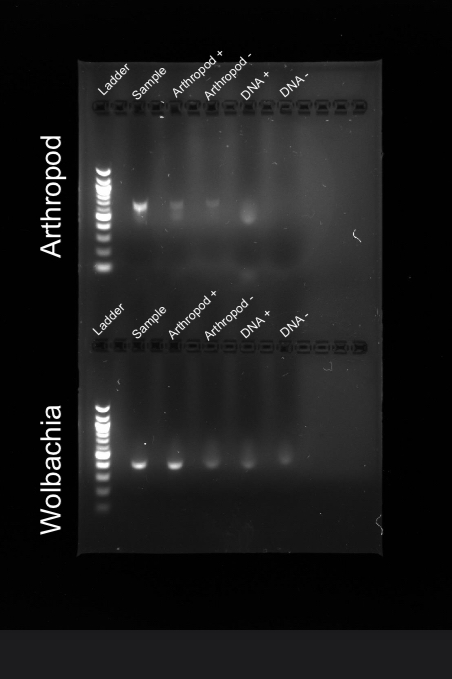
|
| Protocol notes |
|
Results |
|
| Wolbachia presence | Yes |
| Confidence level | High |
| Explanation of confidence level | I observed bands in both the Arthropod sample lane and the Wolbachia sample lane, indicating that the target DNA was amplified. Furthermore, the sequencing results showed a 100% match for both the Arthropod and Wolbachia sequences. |
| Wolbachia 16S sequence | Download FASTA
Download AB1
|
| Arthropod COI sequence | Download FASTA
Download AB1
|
| Summary | The Camponotus pennsylvanicus was found to be postive for Wolbachia. |
 Millipede
 Brown Widow
 (no title)
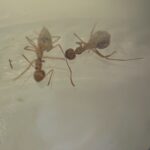 Texas Carpenter Ant
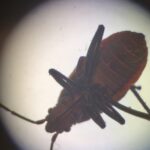 Boxelder Bug (Hemiptera)