Sample information |
|
| Picture |
|
|---|---|
| Location | Approximate location: 32.66, -97.10 |
| Collection date | 03/23/2021 |
| Captive / Cultivated? | Wild-caught |
| Group | Venture High School |
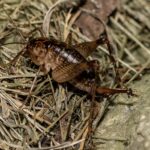
| Observations | The Stone Dwelling centipede has a more circular head that has a number of simple eyes. These are darkly pigmented and when they are numerous, they form a dark patch on each side of their head. Their antennae are quite long, usually at least one-third of the length of the body. Predator to small insects and other smaller arthropods, prey to shrews, toads, badgers, and birds. |
| Putative identification | Arthropoda Chilopoda Lithobiomorpha |
Methods |
|
| Extraction kit | DNeasy (Qiagen) |
| DNA extraction location | Whole arthropod |
| Single or Duplex PCR | |
| Gel electrophoresis system | MiniPCR |
| Buffer | TBE |
| DNA stain | GelGreen |
| Gel images |
|
| Protocol notes | We followed the recommended conditions for Wolbachia primers only. We used the standard reagents from MiniPCR. |
Results |
|
| Wolbachia presence | No |
| Confidence level | Medium |
| Explanation of confidence level | My control wasn’t that bright but it was easy enough to tell. |
| Wolbachia 16S sequence | |
| Arthropod COI sequence |
|
| Summary | The Lithobiomorpha was found to be negative for Wolbachia. |
 (no title)
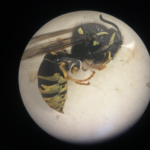 Yellowjacket Wasp
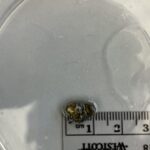 Pillbug
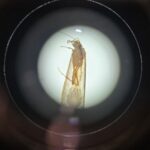 Umpachene Falls Caddisfly
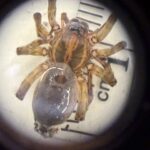 Wolf Spider