Sample information |
|
| Picture |
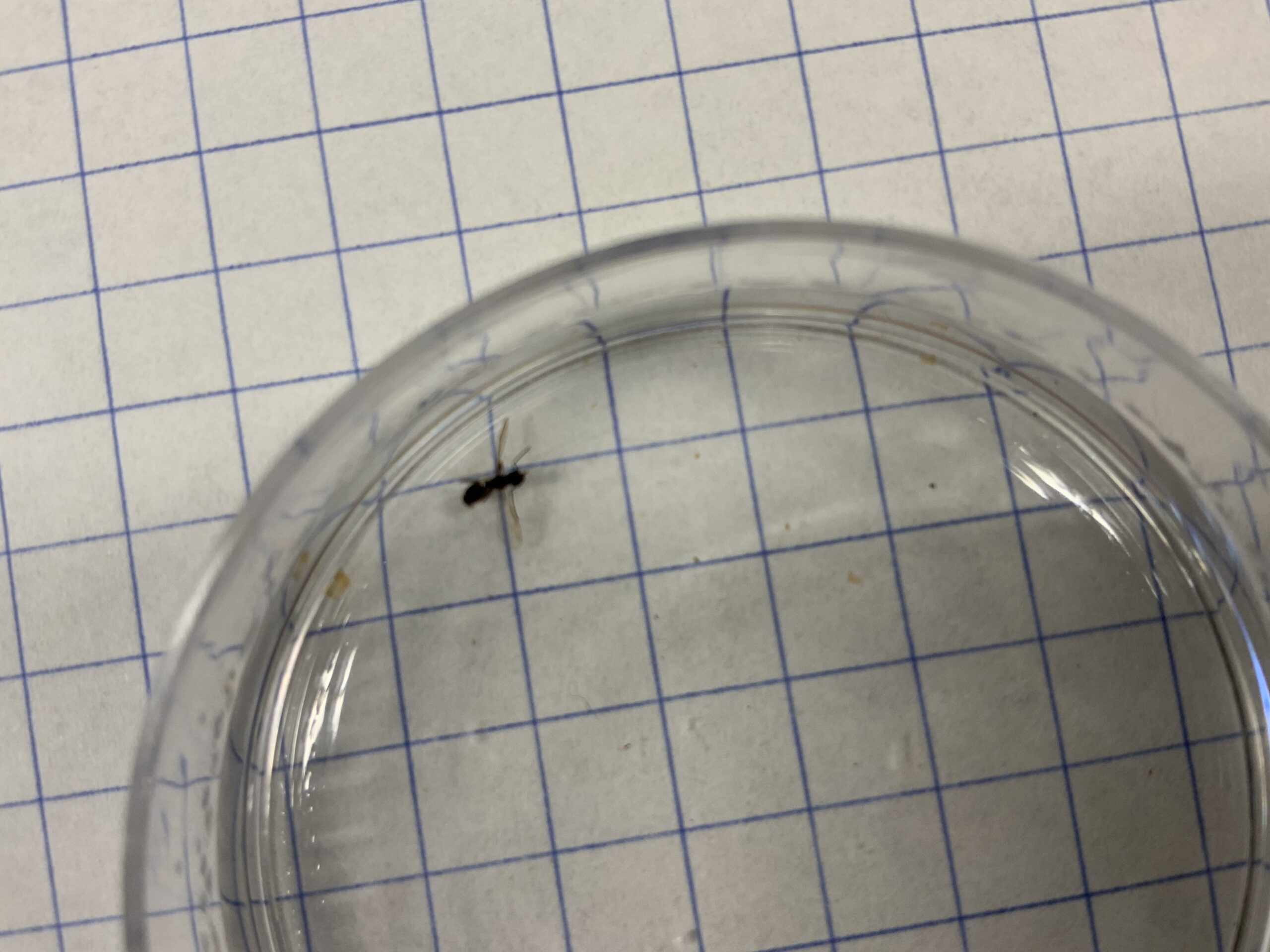
|
|---|---|
| Location | Approximate location: 37.00, -76.31 |
| Collection date | 04/01/2021 |
| Captive / Cultivated? | Wild-caught |
| Group | Hampton Roads Academy |
| Observations | The queen ant is black and brown. It has a small structure. Has 1 pair of wings. The wings are only brown. The bug has 6 legs that are brown and black. Four wings, sparse ribs; front wings are larger than back wings. Chewing type for the mouth part. Completed Metamorphosis. |
| Putative identification | Arthropoda Insecta Hymenoptera |
Methods |
|
| Extraction kit | Edwards Buffer |
| DNA extraction location | Whole arthropod |
| Single or Duplex PCR | |
| Gel electrophoresis system | MiniOne |
| Buffer | TBE |
| DNA stain | GelGreen |
| Gel images |


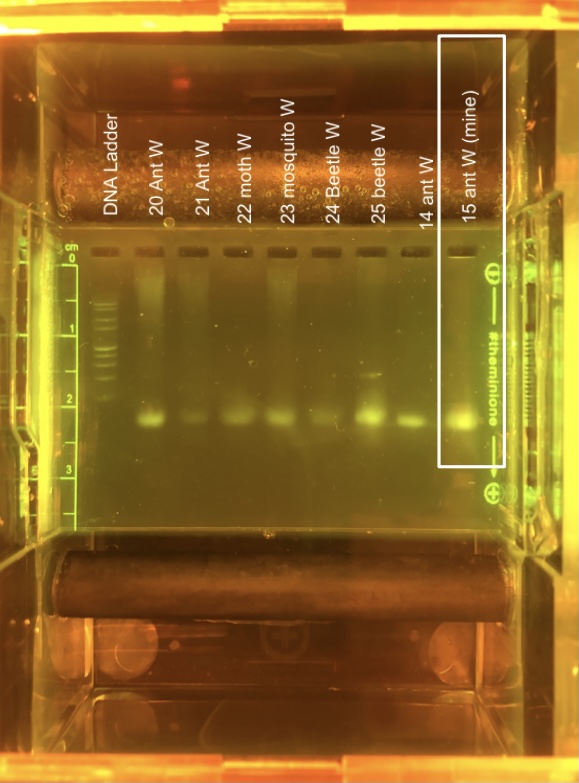
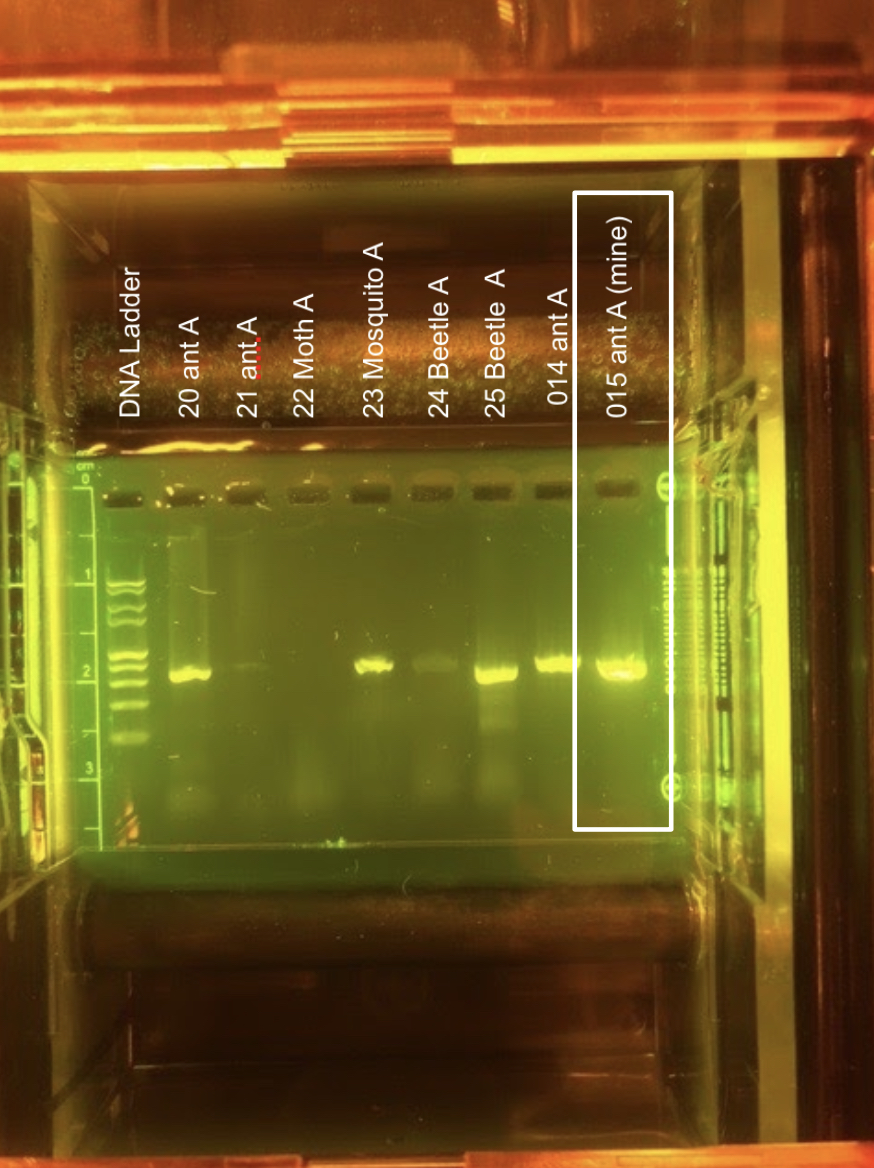
|
| Protocol notes | Overall I think I’ve made no mistakes, however I struggled on the DNA extraction process. The pellet was very small and it was visible. The pellet was a brown color |
Results |
|
| Wolbachia presence | Yes |
| Confidence level | Medium |
| Explanation of confidence level | There may have been a switch between the Wolbachia DNA and the negative arthropod control in the Wolbachia band. In the Wolbachia band the negative arthropod control should not have a band. |
| Wolbachia 16S sequence | |
| Arthropod COI sequence |
|
| Summary | The Hymenoptera was found to be postive for Wolbachia. |
 (no title)
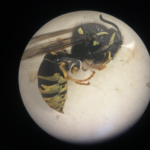 Yellowjacket Wasp
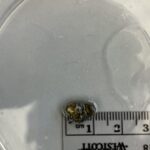 Pillbug
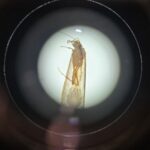 Umpachene Falls Caddisfly
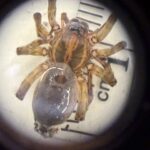 Wolf Spider