Sample information |
|
| Picture |
|
|---|---|
| Location | Approximate location: 42.48, -71.46 |
| Collection date | 09/10/2021 |
| Captive / Cultivated? | Wild-caught |
| Group | Acton-Boxborough Regional High School |
| Observations | |
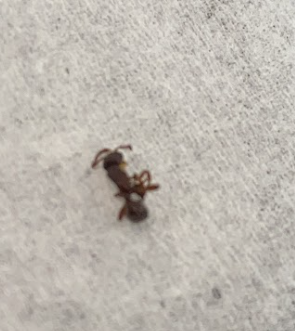
| Putative identification | Arthropoda Insecta Hymenoptera Formicidae |
Methods |
|
| Extraction kit | DNeasy (Qiagen) |
| DNA extraction location | Whole arthropod |
| Single or Duplex PCR | Single Reaction |
| Gel electrophoresis system | Edvotek Gel Electrophoresis |
| Buffer | TAE |
| DNA stain | GelGreen |
| Gel images |
|
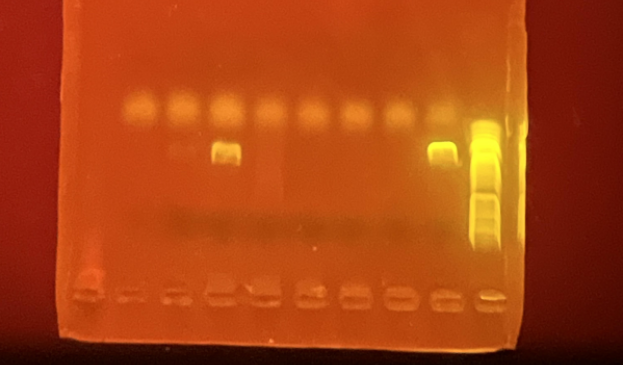
| Protocol notes | Well number four in the image above contains the Wolbachia DNA from our arthropod. |
Results |
|
| Wolbachia presence | Yes |
| Confidence level | Medium |
| Explanation of confidence level | Our Wolbachia gel electrophoresis exhibits a defined band at a distance in correlation with the ladder, indicating Wolbachia presence. However, our control group for arthropod DNA extraction did not display a band, which makes us unsure about our DNA extraction. This lack of a band in our control may also be a result of faulty PCR for the Arthropod DNA. |
| Wolbachia 16S sequence | |
| Arthropod COI sequence |
|
| Summary | The Formicidae was found to be postive for Wolbachia. |
 (no title)
 Yellowjacket Wasp
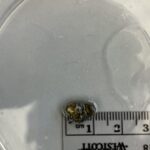 Pillbug
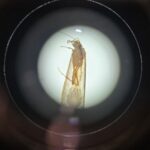 Umpachene Falls Caddisfly
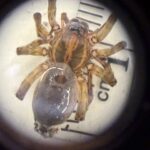 Wolf Spider