Sample information |
|
| Picture |

|
|---|---|
| Location | Approximate location: 37.22, -76.65 |
| Collection date | 04/11/2022 |
| Captive / Cultivated? | Wild-caught |
| Group | Hampton Roads Academy |
| Observations | The arthropod was found in a terrestrial environment near some small rocks. It was a wooded area near shrubs and flowers. Flying ants have elbowed antennas and long fore wings. It has a thin waist constricted at the thorax and small hind wings. The darkly-colored ant is slightly larger than a grain of rice. |
| Putative identification | Arthropoda Insecta Hymenoptera |
Methods |
|
| Extraction kit | Edwards Buffer |
| DNA extraction location | Whole arthropod |
| Single or Duplex PCR | Single Reaction |
| Gel electrophoresis system | MiniOne |
| Buffer | TBE |
| DNA stain | GelGreen |
| Gel images |
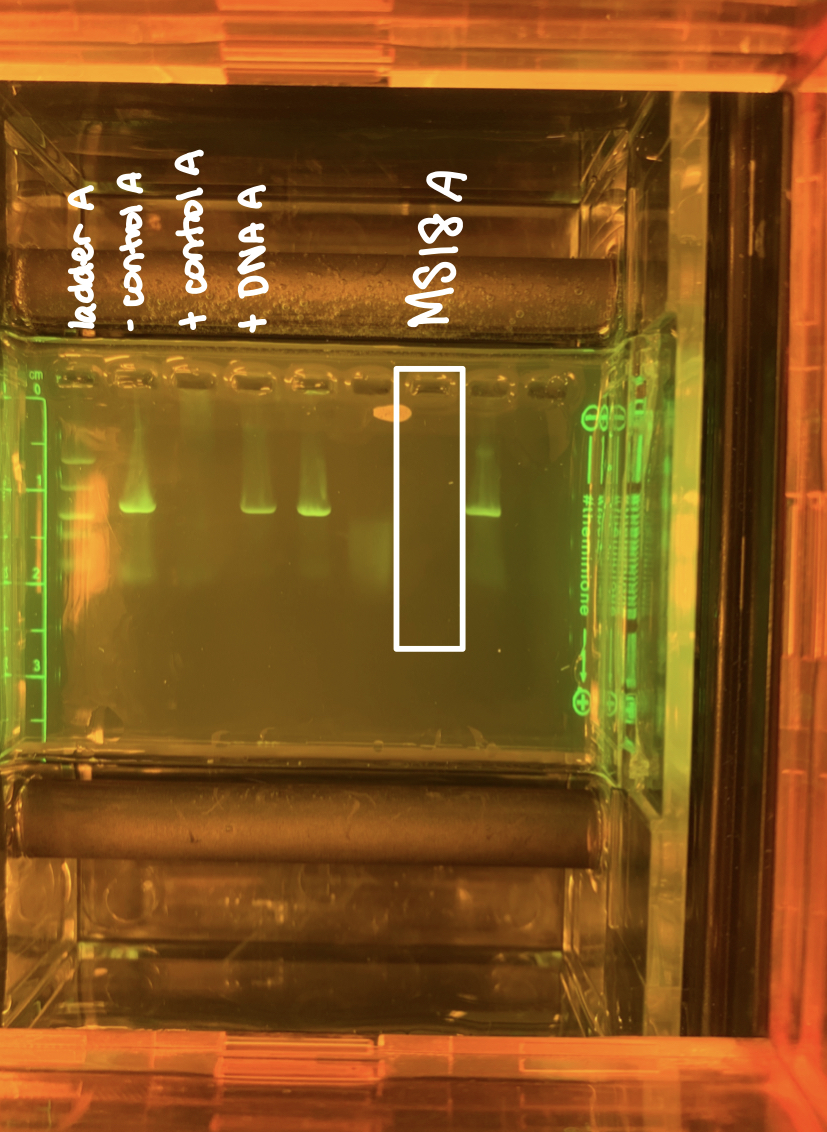

|
| Protocol notes | Possible result mistakes: Pellet Description: small, visible black segments of body churned up
|
Results |
|
| Wolbachia presence | No |
| Confidence level | Low |
| Explanation of confidence level | The positive control did not test for an arthropod, and the negative control tested to be an arthropod. |
| Wolbachia 16S sequence | |
| Arthropod COI sequence |
|
| Summary | The Hymenoptera was found to be negative for Wolbachia. |
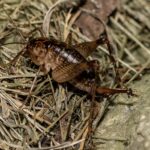 (no title)
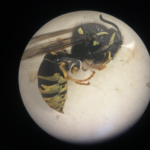 Yellowjacket Wasp
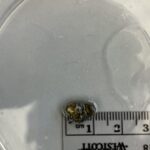 Pillbug
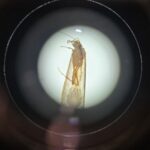 Umpachene Falls Caddisfly
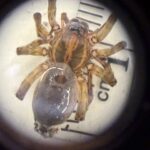 Wolf Spider