Sample information |
|
| Picture |
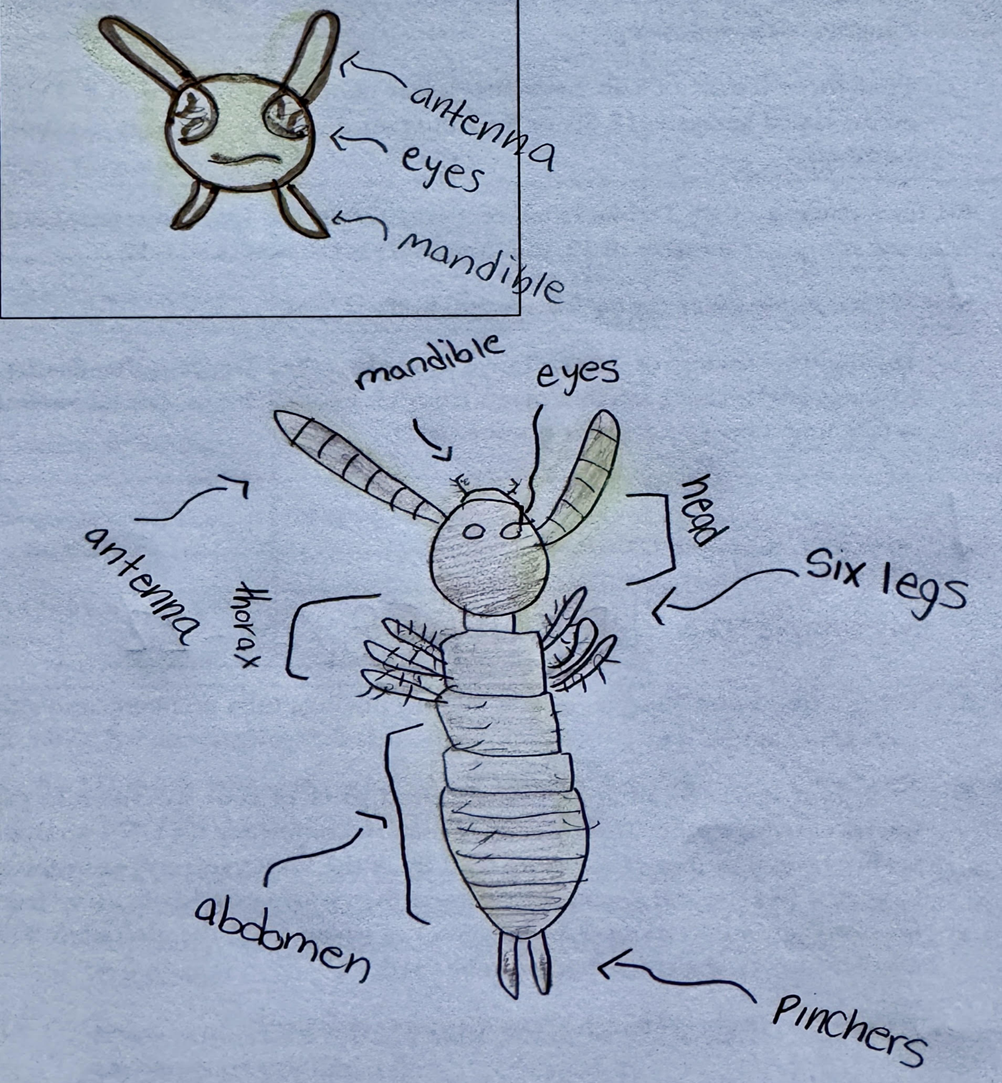
|
|---|---|
| Location | Approximate location: 31.97, -81.16 |
| Collection date | 01/24/2024 |
| Captive / Cultivated? | Wild-caught |
| Group | Georgia Southern University |
| Observations | Completed on 1/24/24 at 1-1:30 pm, class completed in-lab insect collection. Location: field by the greenhouse on the GSU Armstrong campus Environment/ Habitat: Terrestrial (land-based)/ damp due to rain Location: Field, looking under logs and tall grass with sweep net (collection technique) Discovery: Many bugs (ants, beetles, worms, and many unknown species) Temperature: moderately warm, more bugs were out and were easier to catch |
| Putative identification | Arthropoda Insecta Dermaptera |
Methods |
|
| Extraction kit | |
| DNA extraction location | Abdomen |
| Single or Duplex PCR | Single Reaction |
| Gel electrophoresis system | Standard electrophoresis system |
| Buffer | TAE |
| DNA stain | Other |
| Gel images |
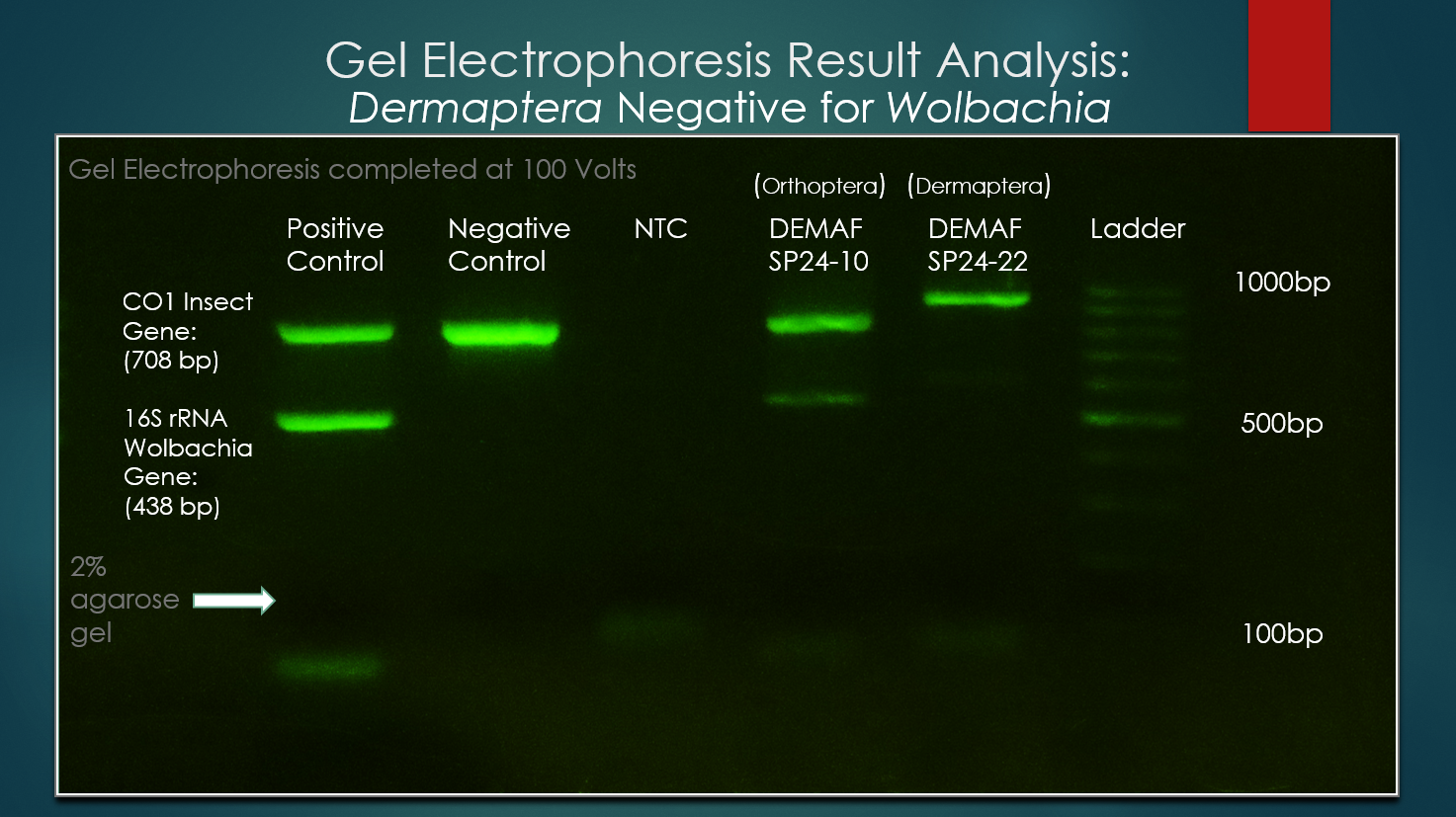
|
| Protocol notes | |
Results |
|
| Wolbachia presence | No |
| Confidence level | High |
| Explanation of confidence level | My confidence level is high. After finishing my project viewers can see that the data controls worked. Not only that, they also lined up with my prediction/local data which states that Wolbachia will not be precent in Dermaptera. |
| Wolbachia 16S sequence | |
| Arthropod COI sequence |
|
| Summary | The Dermaptera was found to be negative for Wolbachia. |
 (no title)
 Yellowjacket Wasp
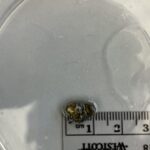 Pillbug
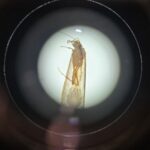 Umpachene Falls Caddisfly
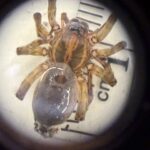 Wolf Spider